

The 4 Aims of Life – Houses 7–12: Podcast Summary with Kalidas
In this episode of Jyotish: A Vedic Astrology Podcast, I sat down again with Kalidas to continue our journey through the houses. Last time we explored houses 1–6. This time we move through houses 7–12 — the “second half” of the chart — where life becomes less about shaping the self, and more about being shaped by relationship, karma, service, community, and ultimately the longing for liberation.
One theme kept returning: the zodiac is a mirror. Each house is paired with its opposite, and we’re constantly being invited to balance the two ends of an axis — not by becoming perfect, but by becoming honest, humble, and more aligned with the will of God.
What follows is a summary of Kalidas’s reflections on houses 7–12, with the spiritual lessons he emphasised most.
7th House: The Mirror of Relationship
If the 1st house is the house of self, the 7th is the house of other — and Kalidas doesn’t mince words: this is where we get tested.
Relationships, especially close ones, aren’t just companionship. They’re mirrors. The people we live with, work with, love, and struggle with tend to reflect the exact growth-edge we’d rather avoid. Kalidas quoted Yogananda’s teaching: when we see something “wrong” in someone else, it’s often pointing to something in us — at the very least, our judgment… and usually something deeper like impatience, lack of compassion, or immaturity in relating.
He spoke powerfully about Saturn in the 7th house (or Saturn transiting the 7th): it can bring relationship tests, not to punish, but to mature us. Saturn here shows where we’re still “a baby” in how we relate — where we’re still seeking validation, recognition, or self-worth through another person’s eyes.
The higher expression of the 7th house is a turning point: shifting from
“What can I get from others?” to “How can I serve others?”
And starting at home. Not in theory. In the daily friction of real life.
8th House: Karma, Humility, and the Fire of Transformation
Kalidas described the 8th house as the place where we meet karmic debt — often in ways that feel confusing, unfair, or hard to accept. This is a moksha house, but its lower expression can look like avoidance, deception, blame, or a desperate attempt to escape pain.
He framed it as the house where we learn a difficult truth: life is dualistic. If we chase only highs — intense pleasure, intensity, “ecstasy”, indulgence, altered states — we also invite the lows. And for many people the 8th house becomes a teacher through depletion: burnout, loss of energy, consequences of choices, hard consequences of selfishness.
Yet the higher expression is profound. The 8th house can create real healers — people who can guide others through darkness because they’ve walked there themselves. Kalidas gave the example of people with strong 8th-house signatures becoming servants of those with heavy karma: running halfway houses, helping addicts, working with prisoners, becoming shamans and healers.
The central key he offered was this: karma is ultimately an expression of God’s love — because it dissolves the barrier between us and God.
And he gave a prayer I found deeply moving:
“I don’t know what to do here. But God, you know what to do . Help me follow the highest path so I work out my karma rather than create more.”
The 8th house humbles. But it also liberates — especially when met with devotion, honesty, and surrender.
9th House: Dharma, Grace, and God’s Will
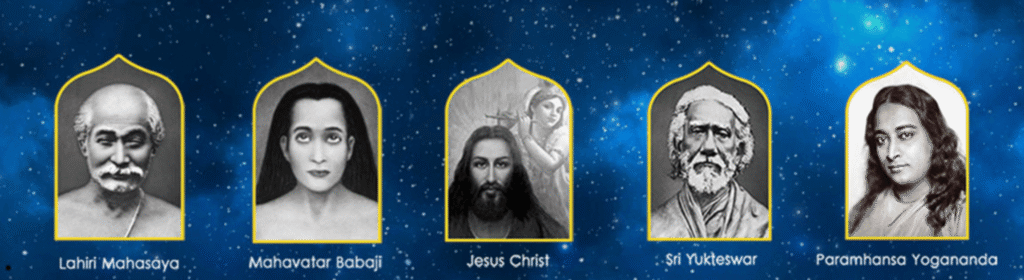
The 9th house, Kalidas said, is the house of grace and good fortune — not because life becomes easy, but because it represents alignment with what truly lasts: spiritual effort, dharmic living, and attunement to God’s will.
He explored it as the mirror of the 3rd house. The 3rd house is self-will, talent, independence, even self-employment. The 9th is God’s will, faith, spiritual law, and the long view.
But he offered an important nuance: spirituality can become imbalanced. Some people become so “9th house” that they fear their own mind — clinging to dogma, authority, or rules, afraid to think for themselves. Others become so “3rd house” that they reject guidance entirely and wander without prayer or humility.
The balance is not “my will vs God’s will.”
It’s my will guided by God’s wisdom.
Kalidas quoted a powerful affirmation from Yogananda:
“I will reason, I will will, I will act — but guide Thou my reason, will, and activity.”
And he gave a simple example that made me smile: sometimes God’s will looks like… dishwashing. And the ego says, “I’d rather meditate.” But the thing given to us — the duty, the service, the practical act of love — can be the very road to grace.
10th House: Public Work and the Inner Home
The 10th house is the house of work in the world — status, public expression, vocation, “what do you do?” It’s the visible part of the chart.
But Kalidas kept bringing it back to the mirror: the 10th house is opposite the 4th house, the inner home. Your outer work can never truly flourish if the inner home is neglected. And for many people, intense career drive is partly a response to unresolved emotional patterns from childhood.
This axis isn’t about choosing one over the other. It’s about integration: if you make the home a place of harmony, service, and emotional steadiness, that energy naturally spills outward into your public work.
He also offered a Saturn truth I appreciated: delays and obstacles are often Saturn’s way of teaching patience and integrity. Rather than forcing our way through, the question becomes: what is Saturn trying to teach me through the slowing down?
There was also a strong reminder here: astrology shows not just what we want, but when karma ripens. The chart can give patience — a relief from that restless “this year has to be the year” mentality.
11th House: Gains Through Community and Group Support
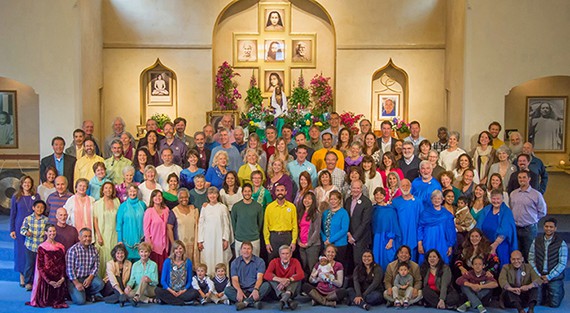
Kalidas described the 11th house as the house of group consciousness, community, shared goals, and support — serving something bigger than yourself, and being served by it.
He spoke beautifully about spiritual community as one of the greatest “gains” a person can have in this chaotic world: like-minded souls seeking truth together. When a group of sincere people gather around something meaningful, something higher can emerge than any one person’s opinion.
But the 11th house also challenges the ego in a particular way: it asks us to compromise our personal viewpoint for the sake of harmony. It asks us to listen. It asks us to respect other people’s karma, their level, their gifts — without needing to be the smartest person in the room.
He shared candidly about his own learning curve in community: wanting to be recognised as developed, clashing with others, and eventually being humbled into a deeper respect for other sincere souls.
The higher 11th house, in his view, looks like this:
a community that prioritises harmony and spiritual growth, where people value each other’s contribution, and where shared attunement becomes healing for the world.
12th House: Loss, Surrender, Meditation, and the Path to Liberation
The 12th house is where the chart ends — and it carries the scent of endings: loss, sorrow, detachment, and the meeting of the finite with the infinite.
Kalidas spoke of the 12th house as the place where people feel, sometimes early in life, that worldly chasing doesn’t satisfy. Even if life brings gains — money, love, recognition — it all goes. This isn’t pessimism; it’s clarity.
The 12th house can produce mystics and deep meditators. It can also, in its lower expression, show unhealthy escape: prisons, hospitals, breakdowns, addictions, trying to flee reality rather than transcend it.
And again, the mirror is key: the 12th house is opposite the 6th house. Meditation and service. Bhakti and karma yoga. These two roads lead to the same destination when held in balance.
Kalidas offered a definition of renunciation that I found very practical, and very Dwapara Yuga:
Renunciation is not abandoning life.
It’s renouncing complaint. Renouncing ego.
Accepting the life God has given, learning what we’re meant to learn, and trusting that when the lesson is complete, God releases us.
The 12th house asks: What do you want to lose?
And the best answer is: the ego, the karma, the sense of separateness.
That’s why the episode ended with this beautiful emphasis: the spiritual life is a rhythm of meditation and service. We go deep, then we offer. We attune, then we act. And in that flow, we gradually lose what we never truly were — and return to what we are.
Closing Reflection
This conversation with Kalidas reminded me again that astrology isn’t just prediction. It’s spiritual education. It’s a map of where we’re unbalanced, where we’re being tested, and where God is quietly trying to mature us.
And the chart doesn’t just describe problems. It describes possibilities.
If you listen closely, the houses don’t merely describe life.
They describe the soul’s curriculum.
If you’d like to listen to the full episode, you can find it on the podcast now. And if you want to explore which houses are most active in your own chart — that’s often where the next layer of inner work, healing, and growth is waiting.

Feeling overwhelmed, confused, or uncertain?
Get 5 personalised astrological practices to help you feel calmer, clearer, and more grounded.
Sign up to receive your free personalised Healing Guide, with 5 simple astrology-based practices tailored to your Ascendant and Moon. This guide is here for the moments when life feels heavy, confusing, or overwhelming — helping you regain clarity, reduce anxiety, and reconnect with inner strength